Creatio AI Agents: What They Can Do That Other CRMs Can't
Ask a CRM vendor about AI and the answer usually arrives as a list of features: a summary here, a lead score there, a draft email on request. Those features are useful. They also stop at the edge of the task — each one produces something, and a person still carries the work forward from there.
An AI agent works differently. It pursues a goal rather than performing a single function, plans the steps needed to reach it, and acts on systems along the way, within the permissions and policies it has been given. That shift changes how much a CRM can genuinely take off a team's hands.
Seven questions separate a CRM with AI features added to it from an AI CRM built around agents:
- What works on day one?
- Who can build more?
- Does an agent complete a whole process, or only a step?
- Where is it allowed to act?
- How much does it do on its own?
- How does it stay governed while acting?
- What happens to cost as usage spreads?
Creatio AI agents approach all seven from the same starting point — AI designed into the platform rather than retrofitted onto it.
What Creatio AI agents are and how they work together
Creatio is an AI CRM and workflow platform where people and AI agents work together, with no limits on users, agents, workflows, or scale — the promise the company calls the Unlimited Enterprise.

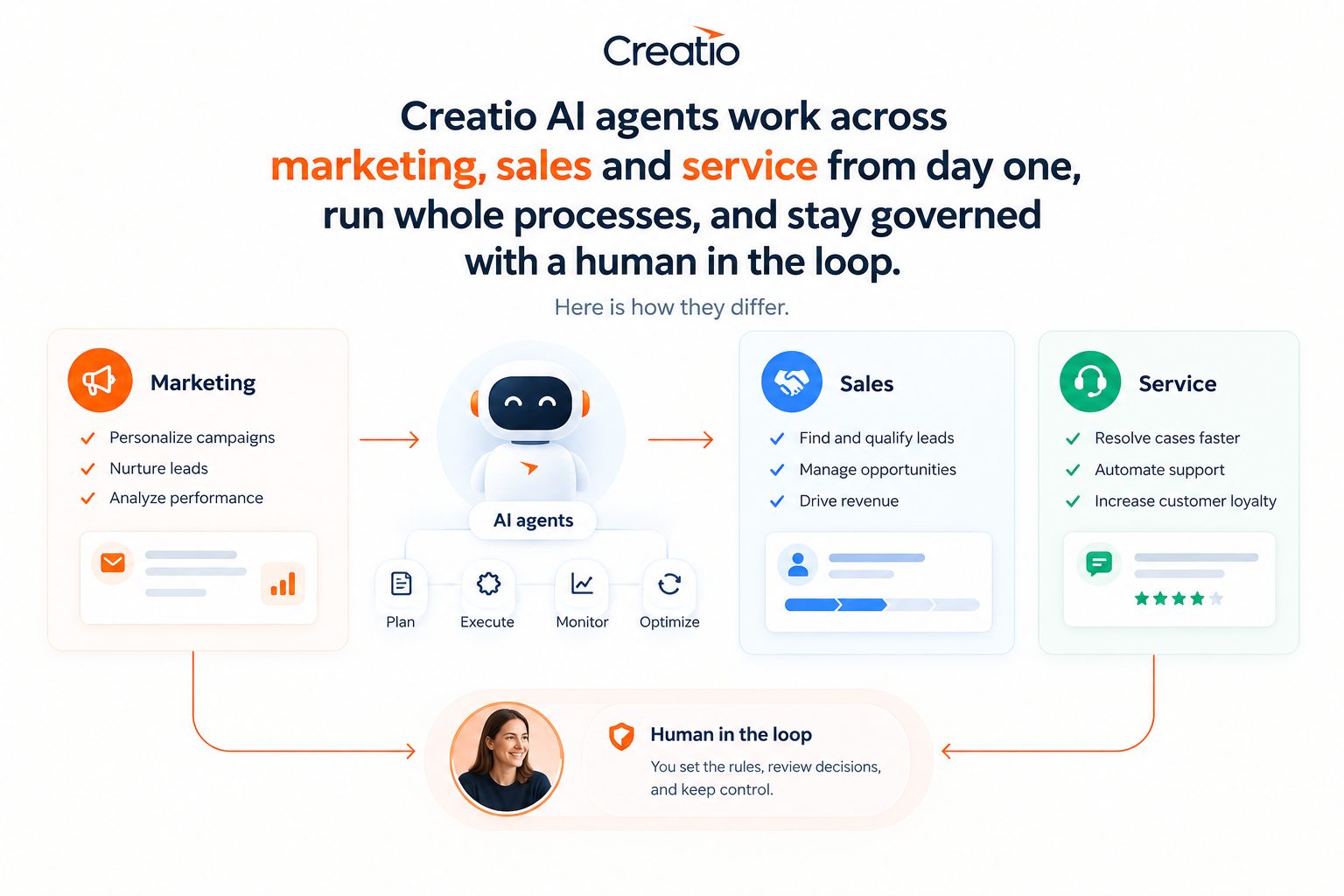
Creatio AI brings that promise into daily work through personal and enterprise agents operating across CRM, industry and operational workflows. Employees create their own agents conversationally with Creatio AI Twin, a no-code experience that turns a goal described in plain language into a working personal agent in minutes. Organizations build, run and govern their enterprise agents in Creatio AI Studio, the AI-native environment for managing the end-to-end agent lifecycle. Alongside both, Creatio provides pre-built CRM agents for marketing, sales and service, and agents purpose-built for industry workflows.
Agents work in different modes. An assistive agent supports a person who remains the primary actor, drafting, recommending and preparing. An autonomous agent performs approved multi-step work with limited direct human execution, inside defined policies and escalation paths. Which mode an agent uses is a configuration decision rather than a fixed property of the agent.
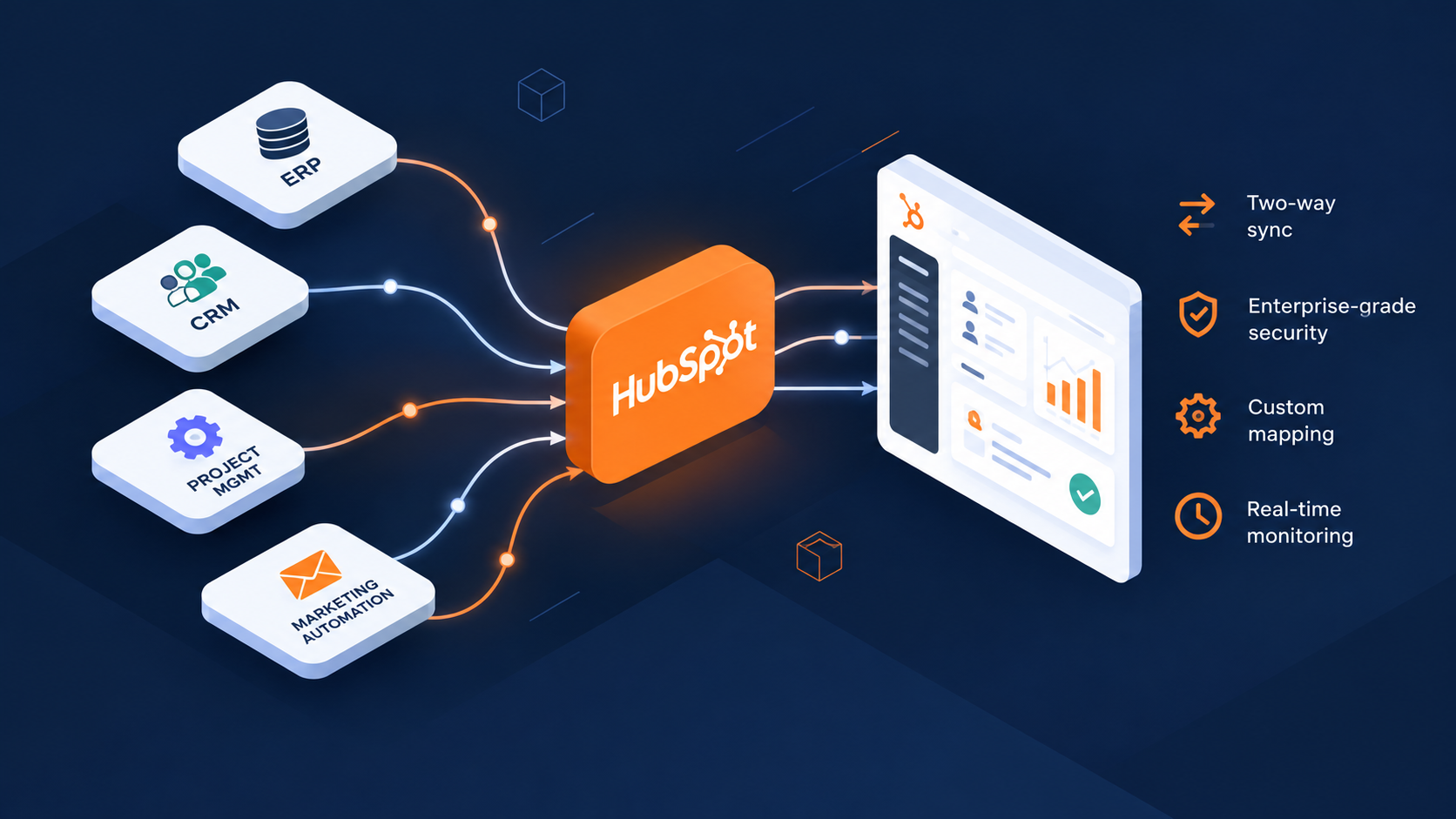
Because the AI is native to the platform rather than bolted on as a separate layer, a Creatio AI agent works inside the same roles, permissions and business rules that already apply to the employee it acts for. Agents also reach past Creatio itself: through integrations, APIs and Model Context Protocol they act on an ERP, a core banking system or a data warehouse, so Creatio can orchestrate AI across an existing technology estate without having to become the system of record for it. Organizations connect the model they prefer, including OpenAI, Anthropic Claude and Google Gemini, or host their own.
The agents appear where employees already work, inside Outlook, Teams and Zoom and on web and mobile, and reach customers through chat, email, SMS and voice.
Pre-built CRM agents that work from day one
Most AI in a CRM has to be configured before it does anything. Creatio includes a set of pre-built CRM agents in the core product, grouped by the team that uses them, with no separate per-agent licence to buy before someone can start.
Creatio AI marketing agents

These carry a campaign from audience to analysis.
- Segmentation Agent — builds audiences from a plain-language brief
- Campaign Generation Agent — turns a goal into a structured campaign and journey
- Email Creation and Editing Agent — drafts on-brand copy, adjusts tone, translates
- Assets Generation Agent — produces landing pages and lead capture forms
- Campaign Optimization Agent — catches deliverability problems before send
- Conversion Insights and Analytics Agent — shows which touchpoints actually converted
Creatio AI sales agents

These take administrative weight off a rep's week.
- Lead Insights Agent — scores a lead and explains what drove the score
- Data Enrichment Agent — fills missing account and contact detail from external sources
- Account Awareness Agent — watches for funding rounds, leadership changes and risk signals
- Opportunity Insights Agent — summarises deal history and flags deals going quiet
- Meeting Preparation Agent — builds a briefing and agenda before a call
- Next Best Action Agent — recommends the move that advances the deal
- Next Best Offer Agent — identifies the upsell or cross-sell that fits the account
- Sales Productivity Agent — summarises threads, drafts replies, schedules follow-ups
Creatio AI service agents

These work on the case in front of the specialist, and on what the team learns from it.
- Case Understanding Agent — condenses a long case into a summary with customer sentiment
- Resolution Guidance Agent — retrieves similar resolved cases and returns a step-by-step plan
- Knowledge Creation Agent — turns a solved case into a knowledge base article
- Next Best Action Agent — guides specialists through approved procedures
- Service Performance Insights Agent — builds dashboards on volume and resolution times
- Root Cause Analysis Agent — clusters repeat cases to find the underlying driver
- Agent Productivity Agent — rewrites for tone, translates, schedules callbacks
Three pre-built CRM agents in a working week
Here is how three of them show up in practice.
The Lead Insights Agent scores a lead and then explains the score — the intent signals behind it, how the contact matches the ideal customer profile, what comparable leads did next — so a rep knows why a name is worth calling.
The Campaign Optimization Agent reads a campaign before it ships, flags subject lines likely to trip spam filters, and proposes alternatives.
The Knowledge Creation Agent turns a solved case into a structured knowledge base article, so a fix found once becomes searchable for everyone.
All of these are assistive by default. They draft, recommend and prepare, while the person stays the primary actor.
Who can build AI agents in Creatio, and how
Most agent platforms put building in the hands of a technical team. That creates a queue, and the queue quietly decides which ideas survive. Creatio opens building at two levels.
Creatio AI Twin: personal AI agents built in plain language
Creatio AI Twin is a conversational, no-code experience that empowers employees to build personal agents using natural language. Someone describes a goal — chase the documents missing from this week's applications, pull my accounts into a Monday briefing, draft the follow-ups I always write by hand — and iterates with the Twin until the agent does what they meant. They test it instantly through conversation, then move it from sandbox to production using the built-in governance framework.
The promise is to turn everyday employees into builders who solve problems the moment they spot them, with no backlog and no technical skills required. The governance question that usually follows has a short answer: the AI Twin gains no new privileges. It inherits, and is bound by, the same access as the person it acts for, under existing roles and business rules, with a full audit trail.
Creatio AI Studio: enterprise AI agents built, run and governed at scale
Where AI Twin serves an individual, Creatio AI Studio is the AI-native environment organizations use to build, run and govern enterprise AI agents across their full lifecycle. Agents are described in plain language and refined from there, connected to the models, data, knowledge, applications and APIs already in the technology estate, orchestrated alongside employees, business rules and approvals, then evaluated, versioned and governed once they are running.
Both routes draw on the same governed foundation, so nothing gets built outside what the organization has approved.
Creatio Autonomous AI agents that complete a whole process

An assistive agent hands back a draft. Some work needs more than that — a process that runs for weeks, crosses several systems, and carries a compliance requirement at every stage.
Creatio builds autonomous AI agents for that kind of work. An autonomous agent performs approved multi-step work with limited direct human execution, inside defined policies and escalation paths. It watches for its own trigger rather than waiting to be opened, assembles the context it needs, executes across systems and channels, and escalates to a person at the points the organization has specified.
Customer onboarding shows the difference plainly. Instead of someone shepherding a new customer through document collection, validation, checks and system updates, the Customer Onboarding Agent runs the sequence from beginning to end, handles the exceptions it is equipped to handle, and routes the rest to a person who can decide.
The same pattern applies to CRM workflows as well as industry-specific ones. Agents run natively inside Creatio CRM, or against the systems a company already operates, including a CRM from another vendor.
Agents that act across the systems you already run
Much of what a good decision needs sits outside the CRM — in an ERP, a core banking system, a billing platform, a data warehouse. An agent confined to its vendor's own database can only reason about part of the picture.
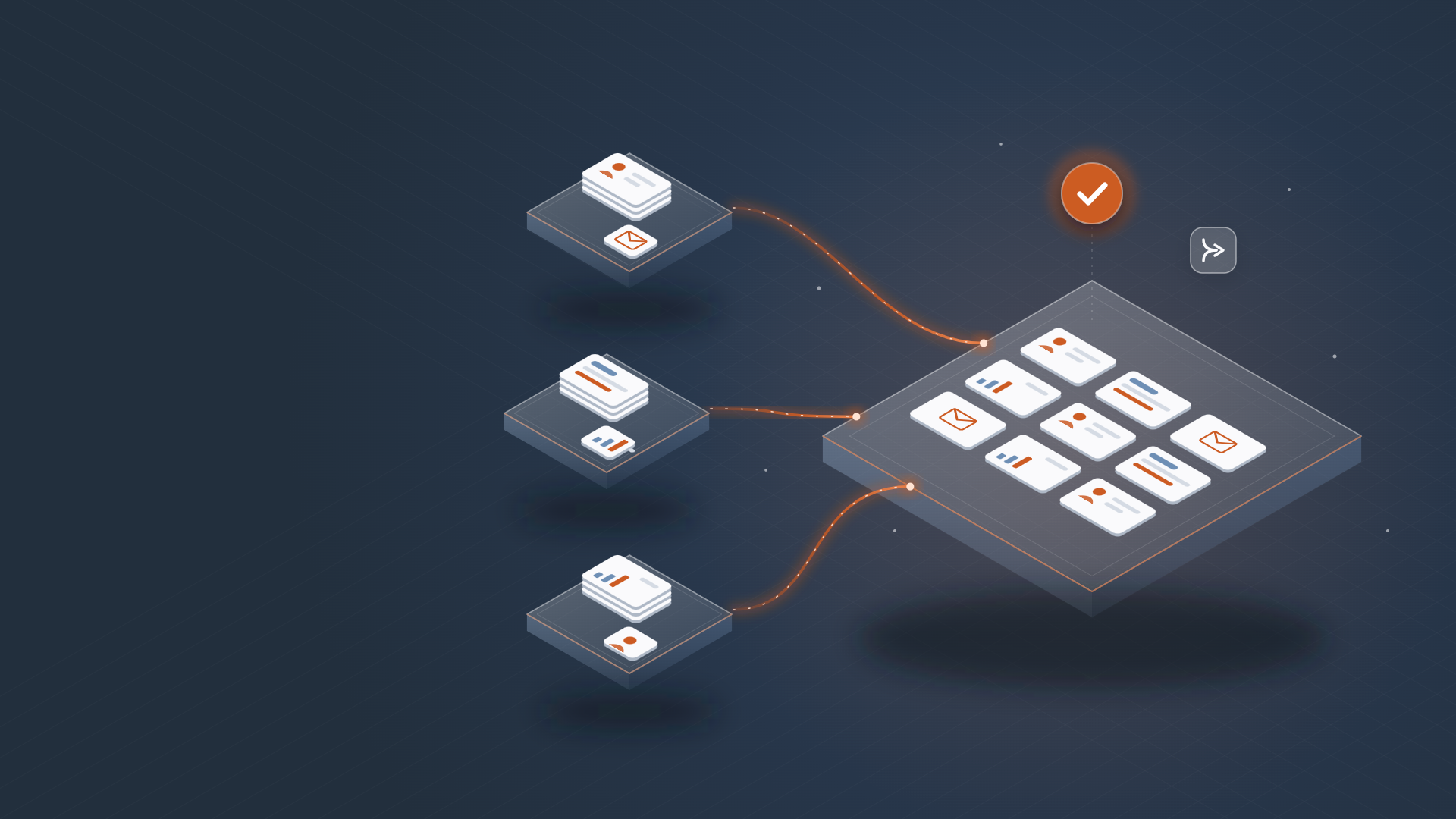
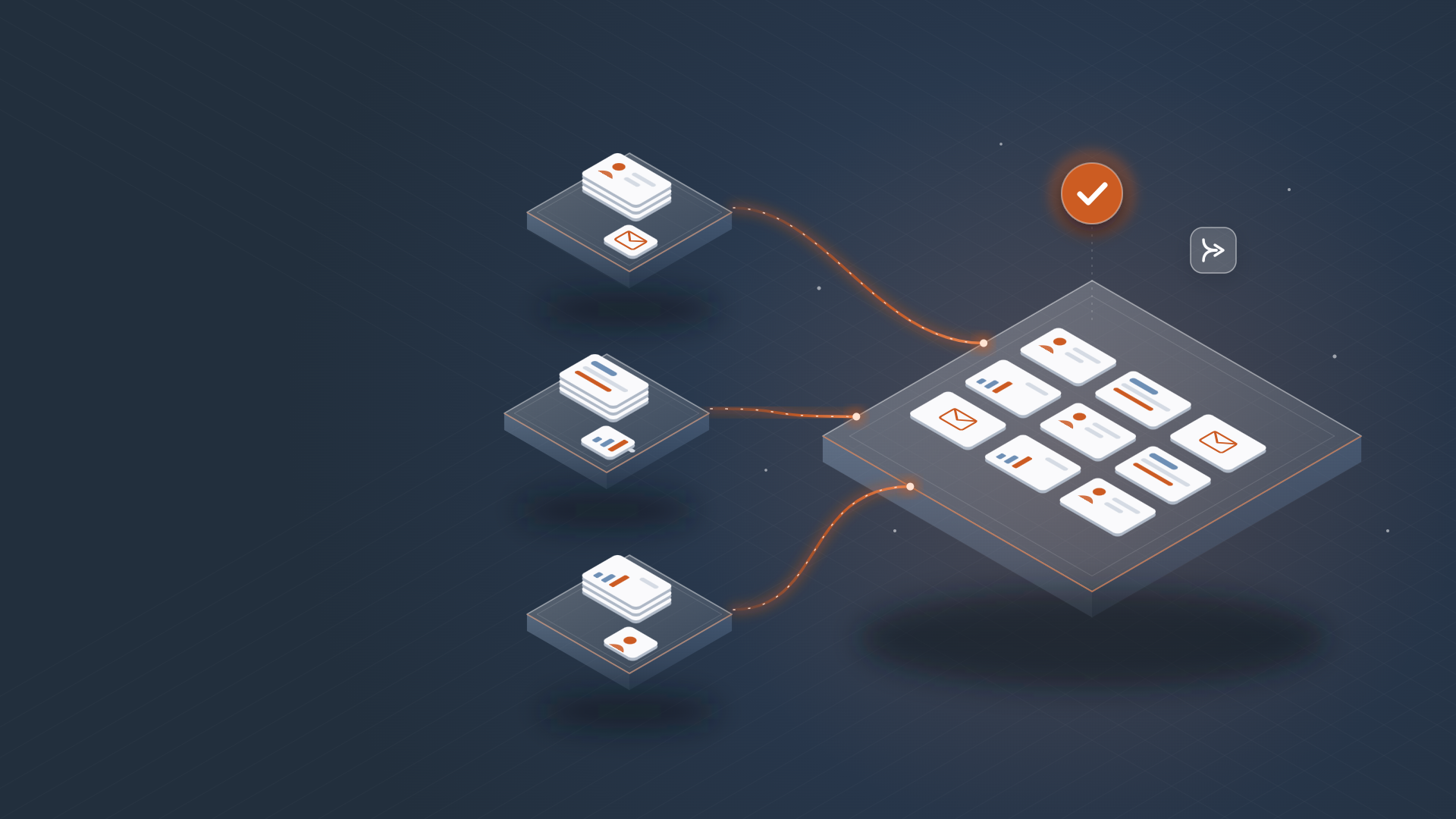
Creatio AI agents connect through integrations, APIs and Model Context Protocol, including a native MCP server that exposes Creatio's business data, records, workflows and actions to agents, and custom MCP servers an organization builds to expose its own proprietary systems. The practical result is that Creatio orchestrates agents across the technology estate already in place. There is no rip-and-replace programme, and Creatio does not have to become the system of record for data that already has a home.
It also means an agent can run against a CRM from another vendor, which suits organizations that want agentic automation before a platform migration, or instead of one.
Setting agent autonomy: suggest, assist, act, with human-in-the-loop
The question buyers ask about agents is rarely what they can do. It is what they will be allowed to do, and what happens when they get something wrong.
Creatio treats autonomy as a setting rather than a fixed property. An agent can suggest, proposing a draft or a next step while the person decides. It can assist, completing a delegated task and returning it for approval. Or it can act, running the workflow inside defined guardrails and escalating only the exceptions. Teams typically start supervised and widen autonomy one process at a time, as evidence accumulates.
Human-in-the-loop is built into that progression rather than added at the end of it. Organizations configure the approval steps, escalation paths and confirmation points where an agent must pause for a human decision, covering anything that touches pricing, fees, credit or a high-value customer relationship. Agents are also tested in sandbox and pre-production environments, then introduced in advisory or assisted mode before anything runs unsupervised.
AI agent governance that holds whichever model runs underneath
Governance is easy to claim and harder to demonstrate, so the specific mechanisms are worth naming.
An agent operates within the roles, permissions and business rules already defined in the platform, so it cannot reach data that is off limits to the person it works for. Policies set organization-wide and agent-level rules for behaviour, tool approvals and usage restrictions. Every action is logged and traceable, with the reasoning and evidence behind it, and answers are grounded in vetted knowledge with citations back to the source document. Observability dashboards show agent activity, success rates, policy triggers, approvals and model consumption as they happen. Versioning and rollback apply to agents as they do to any other production asset.
Creatio's AI trust and governance framework covers the architecture beneath all of that: a dedicated data privacy layer, role-based access control, encrypted integrations, data segmentation and isolation, compliance with GDPR, HIPAA and ISO standards, and explainability so a team can see how an agent reached a conclusion. Because these controls sit at platform level, they apply whichever model an organization has connected, and they hold as human-in-the-loop checkpoints move.

Scaling AI agents without per-user, per-agent or per-API charges
Agent programmes usually start small and then meet a commercial ceiling. Another department wants access, a workflow needs more API calls, a pilot becomes production, and each step reopens the contract.
Creatio's Unlimited Enterprise model removes that friction, with no per-user, per-agent, per-application or per-API charges, so an organization extends AI across users, agents, applications and workflows without artificial barriers to scale. Consumption stays visible through usage dashboards and budget controls, which makes growth a planning decision rather than a month-end surprise.
Creatio AI agents vs. typical CRM AI features
Set side by side, the seven differences look like this. The left column describes patterns commonly found where AI has been added to an existing CRM rather than designed into it.
|
What to look at |
A typical AI feature layer |
Creatio AI agents |
|
Day one |
Usually needs configuring before it does anything |
Pre-built CRM agents included in the core product |
|
Who builds more |
Typically a technical team |
Employees via AI Twin; organizations via AI Studio |
|
Scope of work |
A step inside a task |
A step, or a whole process from beginning to end |
|
Reach |
Often limited to the vendor's own data |
ERP, core systems, warehouses, another vendor's CRM |
|
Autonomy |
Fixed by the feature |
Suggest, assist or act, set per process |
|
Governance |
Often tied to a specific model |
Platform-level policies, permissions, audit, observability |
|
Scaling |
Per user, per application, per API |
No limits on users, agents, workflows or scale |
Creatio Banking AI Agents built for financial services
Industry workflows show the difference between an assistive feature and a governed agent most clearly, because the work runs long, sits under regulation, and crosses systems that predate the CRM.
Creatio banking AI agents span revenue generation and day-to-day operations. On the revenue side, the Referral Agent identifies referral opportunities from engagement and satisfaction signals and routes qualified referrals onward; the Renewal Agent tracks upcoming deposit and loan renewals, assesses risk and opportunity, and prepares personalised offers; and the Retention Agent detects early churn risk from behavioural, service and sentiment data, then launches targeted retention actions.
On the operations side, the Customer Onboarding Agent runs onboarding end to end, including document collection, validation, task coordination and exception handling. The Loan Preparation Agent automates pre-origination work such as document intake, data extraction and completeness checks. The Loan Servicing Agent manages post-origination servicing requests across systems, with full visibility and auditability.
The Account Servicing Agent shows how far a single agent can carry routine work. It takes a request from any channel, works out what is being asked, confirms identity and applicable policy before changing any record, then completes the change, issues the relevant documents and notifies the customer. Sensitive or complex cases go to a member of staff with the request history, the completed checks and the actions already taken attached, so nothing is asked twice.
These are a selection rather than the full lineup, and it continues to grow. The same agents apply well beyond retail banking, in mortgage and commercial lending, wealth management and insurance, wherever onboarding, servicing and renewals run at volume. Each deploys independently, running natively inside Creatio CRM or against the core systems a financial institution already operates.
Creatio has brought this work together at bank.ai, a destination for banking, credit union and financial services professionals exploring AI. It gathers use cases, customer stories and events, and covers capabilities available on the Creatio Bank.AI platform today alongside the workflows and agents arriving next.
Frequently asked questions about Creatio AI agents
What can Creatio AI agents do?
Creatio AI agents work across marketing, sales, service, industry and operational workflows. Pre-built CRM agents handle everyday work: building audiences, scoring and explaining leads, preparing meetings, guiding case resolution, writing knowledge base articles. Creatio autonomous AI agents go further, carrying a complete process such as customer onboarding or a loan renewal from beginning to end within approved policies.
How are Creatio AI agents different from AI features in a traditional CRM?
An AI feature in a traditional CRM performs a single function when asked. A Creatio AI agent pursues a goal, plans the steps to reach it, and acts on systems within the permissions it holds. Because Creatio is AI-native, agents inherit existing roles and business rules, reach data held outside the CRM, and can be set to suggest, assist or act depending on the process.
Can business users build AI agents without developers?
Yes. Creatio AI Twin is a conversational, no-code experience that lets any employee describe a goal in plain language and build a personal agent in minutes, with no technical skills required. Organizations use Creatio AI Studio to build, run and govern enterprise AI agents, describing what an agent should do in plain language and refining it from there.
Do Creatio AI agents work with systems outside the CRM?
Yes. Agents connect through integrations, APIs and Model Context Protocol, including a native MCP server and custom MCP servers built for proprietary systems. They act on an ERP, a core banking system or a data warehouse, and can run against a CRM from another vendor, so Creatio does not need to be the system of record.
How are Creatio AI agents governed?
Every agent operates inside the roles, permissions and business rules already defined for the person or role it serves. Organizations set policies, approval steps and escalation paths, keep human-in-the-loop checkpoints wherever decisions carry weight, and review a full audit trail. Observability dashboards show activity, policy triggers, approvals and model consumption, and these controls apply whichever model is connected.
Does Creatio offer banking AI agents?
Yes. Creatio banking AI agents cover revenue generation, including referral, renewal and retention, and day-to-day operations, covering customer onboarding, loan preparation, loan servicing and account servicing. They suit banks, credit unions, lenders, wealth management firms and insurers, and each deploys independently alongside the core systems already in place.
Choosing an AI CRM built around agents
Every CRM vendor now has an answer to the seven questions this article opened with. The answers differ considerably more than the marketing language does, which is why they are worth testing against real work rather than a feature list.
Creatio's answers come down to agents that arrive ready to use, a build path that reaches the people closest to the work, autonomy set per process with a human in the loop, governance that holds whichever model runs underneath, and room to grow without a new commercial conversation each time.
The practical test is a process your team runs every week. Walk it through with a vendor and watch three things: how far the agent gets on its own, what it does when something is missing, and who gets asked to approve what.



.svg)