Article Navigation
- Introduction
- Understanding the Difference: Integration vs. Migration
- Why Both Services Matter in 2026
- The Case for CRM Integration Services
- The Case for CRM Migration Services
- SyncMatters: A Comprehensive Approach
- MigrateMyCRM: Specialized Migration Excellence
- Key Features Agencies Should Prioritize
- Building Your Service Offering
- Conclusion
Introduction
As we move into 2026, HubSpot agencies face a critical decision about their service offerings. Clients are increasingly sophisticated in their CRM needs, and they're looking for partners who can navigate the complex landscape of data management, system integration, and platform migration. The question is no longer whether to offer these services, but how to position integration and migration as complementary solutions that address different client needs.
The distinction between integration and migration has become increasingly important as businesses adopt multi-platform strategies and seek to optimize their tech stacks. Understanding when to recommend each approach—and having the right tools and partnerships to execute both—will separate thriving agencies from those that fall behind.
Understanding the Difference: Integration vs. Migration
Before diving into service offerings, it's essential to clarify the fundamental difference between these two approaches.
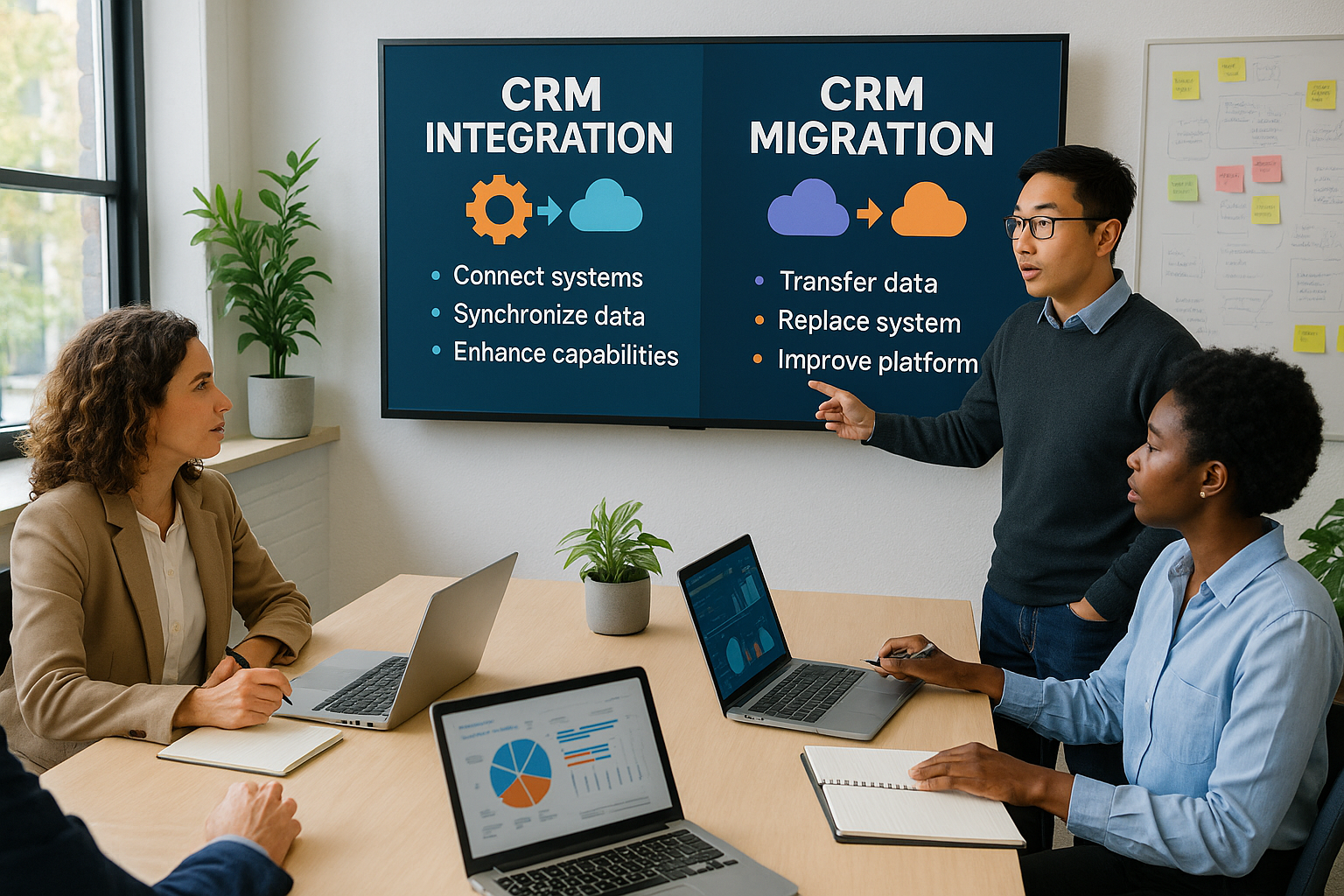
CRM Integration involves connecting multiple systems so they can communicate and share data in real-time or near-real-time. When you integrate HubSpot with another platform, both systems continue to operate independently while exchanging information bidirectionally. Think of it as building bridges between islands—each island maintains its identity, but resources can flow freely between them.
CRM Migration, on the other hand, is the process of moving data from one system to another, typically as part of a platform switch. When migrating, you're relocating your entire operation from one island to another, bringing everything with you and often leaving the old system behind.
Both serve critical business functions, but they address fundamentally different scenarios and client needs.
Why Both Services Matter in 2026
The modern business landscape demands flexibility. Companies are no longer content with monolithic, all-in-one solutions that force them into rigid workflows. Instead, they're embracing best-of-breed approaches, selecting specialized tools for specific functions and expecting them to work together seamlessly.
This trend creates opportunities for agencies in two distinct scenarios. First, businesses need integration services to connect HubSpot with their existing tech stack—whether that's e-commerce platforms, accounting software, customer support tools, or proprietary systems. These clients aren't looking to abandon their current investments; they want to enhance them.
Second, businesses sometimes reach inflection points where migration becomes necessary. Perhaps they've outgrown their current CRM, need enterprise-level features, or are consolidating multiple systems after an acquisition. In these cases, they need expert guidance to ensure a smooth transition without data loss or business disruption.
Agencies that offer both services position themselves as comprehensive CRM partners rather than point solutions. You become the trusted advisor who can recommend the right approach for each situation, rather than forcing every client into the same solution.
The Case for CRM Integration Services
Integration services should form the foundation of most agency offerings because they address ongoing, recurring needs rather than one-time events. When done well, integrations create compound value over time as data flows automatically between systems, eliminating manual work and reducing errors.
Consider a typical HubSpot client running an e-commerce business. They need their online store to communicate with HubSpot for marketing automation, but they also need connections to their fulfillment system, accounting software, and customer support platform. Each integration solves specific pain points while creating a unified view of the customer journey.
The strategic value of integration services extends beyond the initial setup. As clients add new tools or update their processes, they'll need ongoing integration support. This creates a foundation for long-term client relationships and recurring revenue opportunities.
Moreover, integration expertise demonstrates deep technical knowledge of both HubSpot and the broader ecosystem. Clients recognize that connecting systems securely and reliably requires specialized skills, making it a high-value service that justifies premium pricing.
The Case for CRM Migration Services
While integrations handle the ongoing state, migrations address critical transition moments. These are high-stakes projects where clients are making significant business decisions, often investing substantial resources in new platforms. Getting migration wrong can result in lost data, broken processes, and damaged client relationships.
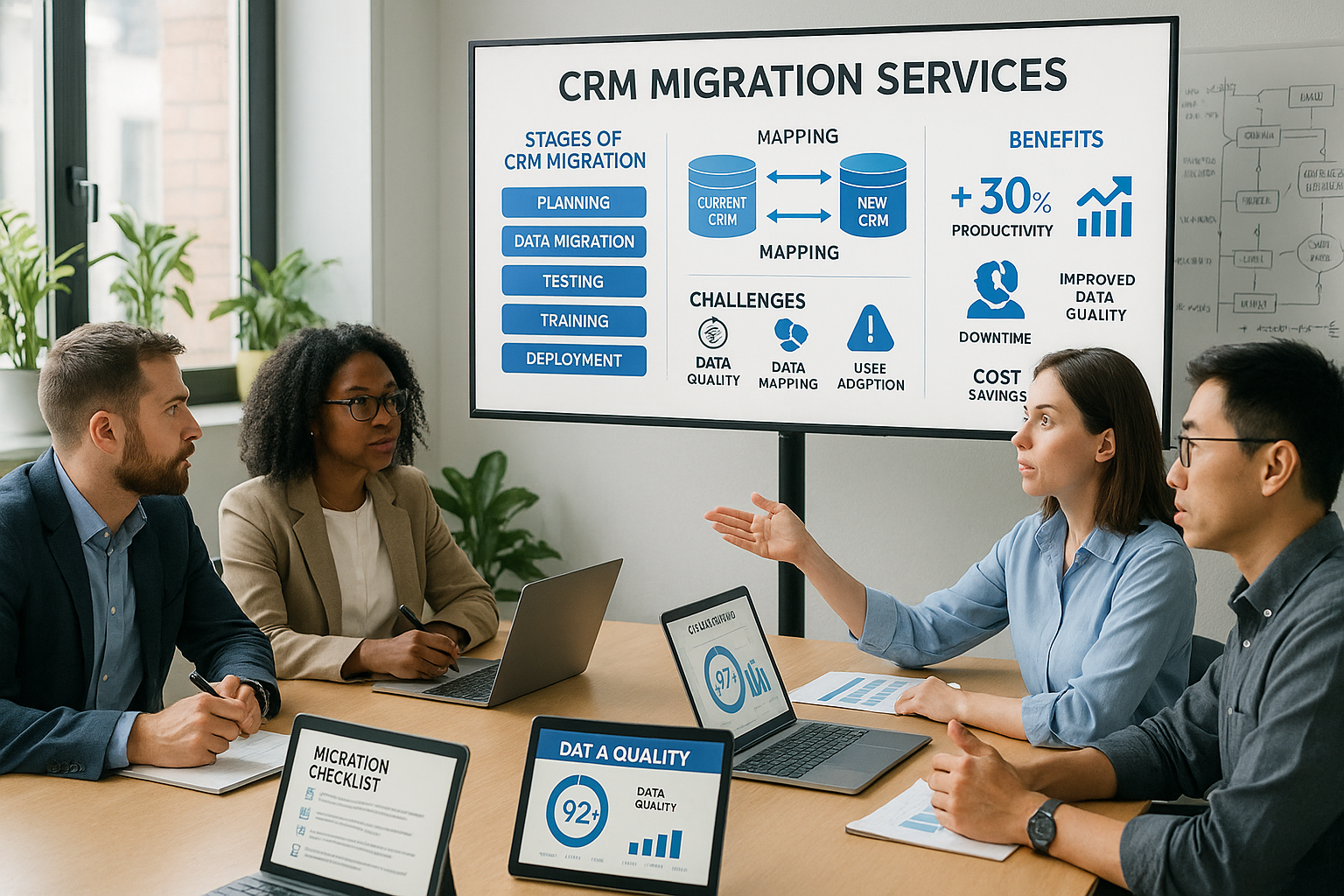
The complexity of modern CRM systems makes professional migration services increasingly valuable. It's not simply about moving contact records from point A to point B. Agencies must preserve relationships between objects, maintain data integrity across custom fields, handle file attachments, migrate historical activities, and ensure nothing falls through the cracks.
Migration projects also represent significant revenue opportunities. They're typically fixed-scope engagements with clear deliverables and timelines, making them easier to price and manage than ongoing integration work. Clients understand that migrations are investment moments and are generally willing to pay for expertise that ensures success.
Perhaps most importantly, successful migrations often lead to long-term client relationships. A business that trusts you to handle their most critical data transition is likely to turn to you for ongoing optimization, integration needs, and strategic guidance.
SyncMatters: A Comprehensive Approach
SyncMatters represents a holistic approach to CRM services, positioning itself as a strategic partner for both integration and migration needs. With over 10,000 app installs and more than 100 sales and marketing certifications, the company has built its reputation on delivering comprehensive CRM solutions that enhance team efficiency and drive bottom-line results.
What sets SyncMatters apart is its emphasis on the complete CRM experience. Rather than treating integration ormigration as isolated technical tasks, the company focuses on strategic implementation that considers how these changes impact overall business processes. This approach recognizes that successful CRM transformations require more than just data movement—they demand careful planning, stakeholder alignment, and ongoing support.
As a certified Elite HubSpot partner with accreditation in Onboarding, Integration, and Data Migration, SyncMatters brings specialized expertise to each aspect of the CRM lifecycle. The company's partnership with leading platforms including HubSpot, Salesforce, and monday.com enables them to support diverse client ecosystems and recommend the best solutions for specific business needs.
Client testimonials highlight the company's ability to handle complex scenarios while maintaining a focus on customer experience. One marketing manager noted that the team elevated the experience beyond just the product, making complex projects less stressful and helping find solutions that truly served end customers. This emphasis on partnership rather than just service delivery reflects the kind of relationship-focused approach that drives client satisfaction and retention.
The company's service philosophy centers on four key principles: boosting productivity and revenue by unlocking the full potential of existing tools, leveraging proven expertise through elite partnerships and extensive experience, tailoring solutions to unique business needs regardless of CRM maturity level, and delivering maximum impact with minimal disruption to daily operations.
MigrateMyCRM: Specialized Migration Excellence
MigrateMyCRM, formerly known as Trujay, represents the specialized platform arm of the SyncMatters ecosystem. With over 4,270 successful migrations and 99.9% uptime serving more than 41,000 users, the platform has established itself as a trusted solution for complex data migrations across more than 25 different connectors.
The platform's value proposition centers on simplifying what has traditionally been one of the most stressful aspects of CRM transitions. Through a structured five-step process, MigrateMyCRM removes much of the uncertainty and manual effort from migration projects.
The process begins with connecting data sources through pre-built connectors that work with existing databases, applications, and data warehouses. This eliminates the need for custom development work or manual data exports that can introduce errors.
Next comes intelligent data mapping, where the platform's mapping engine automatically identifies relationships and data structures. Users can define transformation rules and customize mappings to ensure data lands in the right places within the destination system. This automation dramatically reduces the time required to plan migrations while improving accuracy.
One particularly valuable feature is record matching, which addresses a common challenge in migrations where the destination system already contains some data. The platform allows users to set up matching logic that prevents duplicate records from being created during the migration process.
Perhaps the most compelling feature is the ability to run unlimited free sample migrations. This allows teams to test their mappings, identify issues, make adjustments, and test again without any financial risk. Only when everything looks perfect do clients need to run the full migration. This iterative approach dramatically reduces the risk of costly mistakes.
The platform includes several advanced features that set it apart from basic migration tools. AI-powered auto-mapping automatically handles both native and custom fields to accelerate the setup process. Custom field creation allows users to view fields from the legacy system and create equivalent fields in the destination directly from the interface. Field utilization analysis helps teams determine which fields are actually being used, enabling data cleanup during migration rather than carrying forward unused baggage.
Critical to enterprise clients, the platform preserves all associations and connections between records, including contacts, companies, attachments, and activities. This ensures that the rich relational data that makes CRMs valuable isn't lost during the transition. Additionally, the platform maintains rigorous security standards with ISO certification, GDPR compliance, and trust from highly secure organizations.
Customer testimonials emphasize both the platform's capabilities and the support provided by the team. One chief operating officer noted completing a CRM conversion in under one week—something he considered unimaginable without the product and exceptional support. Another client highlighted how the team went far beyond typical vendor support to ensure a successful outcome.
Key Features Agencies Should Prioritize
Whether building in-house capabilities or partnering with specialized platforms, agencies should focus on several critical features that clients increasingly expect.
Data integrity must be the foundation of any service offering. Clients need confidence that their data will move accurately and completely, with all relationships preserved. This means robust validation processes, comprehensive error handling, and transparent reporting on what was migrated and any issues encountered.
Flexibility in handling complex data structures separates professional-grade solutions from basic tools. Real businesses have customized their CRMs extensively, creating complex fields, custom objects, and intricate relationship structures. Your solution must handle this complexity without forcing clients to simplify their data model.
The ability to run test migrations before committing to full migrations provides enormous value by reducing risk. Clients should be able to validate that mappings are correct, data looks right, and processes will work before pulling the trigger on production migrations.
Automation capabilities reduce both the time and cost of projects while improving accuracy. Look for solutions that can auto-map fields, suggest optimal configurations, and handle repetitive tasks without manual intervention.
Security and compliance features are non-negotiable for enterprise clients. Ensure any platforms you use or build meet relevant security standards, maintain appropriate certifications, and can provide the documentation enterprise clients require.
Finally, support and documentation should be comprehensive. Complex technical projects benefit from detailed guides, responsive support teams, and communities where users can learn from each other's experiences.
Building Your Service Offering
For agencies looking to expand or refine their integration and migration services, several strategic considerations should guide your approach.
Start by assessing your current capabilities honestly. Do you have team members with deep technical expertise in APIs, data modeling, and system architecture? Can you handle complex custom integrations, or should you focus on standard connectors and partner with specialists for edge cases?
Consider a tiered service model that addresses different client needs and budgets. Basic integration packages might include standard connectors and straightforward mappings, while premium services could encompass custom API work, complex data transformations, and white-glove support throughout the process.
Partnership strategy matters significantly. Rather than trying to build every capability in-house, identify platforms and specialists whose strengths complement yours. The partnership between SyncMatters and MigrateMyCRM demonstrates how strategic collaboration can provide clients with both the platform capabilities and strategic guidance they need.
Develop clear methodologies and documentation for your integration and migration processes. Clients value agencies that follow proven frameworks rather than reinventing the wheel for each project. Document your approach, create templates for common scenarios, and establish quality checkpoints that ensure consistent delivery.
Invest in ongoing education for your team. The CRM ecosystem evolves rapidly, with platforms regularly releasing new features, APIs, and integration options. Maintain certifications, attend vendor training, and encourage team members to stay current with best practices.
Consider how you'll price these services. Integration projects often work well as monthly retainers since they involve ongoing maintenance and optimization. Migration projects typically fit fixed-fee models with clear scope definitions and deliverables. Be prepared to explain your pricing rationale to clients, emphasizing the value of getting these critical projects right.
Conclusion
As we move through 2026, the most successful HubSpot agencies will be those that offer comprehensive solutions for both integration and migration needs. These aren't competing services but complementary capabilities that address different client situations and lifecycle stages.
Integration services provide the foundation for long-term client relationships, solving ongoing needs as businesses evolve their tech stacks and optimize their processes. Migration services address critical transition moments where expertise and precision determine success or failure.
By developing strong capabilities in both areas—whether through in-house expertise, strategic partnerships, or specialized platforms—agencies position themselves as essential partners rather than just service providers. Clients facing CRM decisions need trusted advisors who can recommend the right approach, execute flawlessly, and support them through whatever comes next.
The tools and partnerships available today, exemplified by platforms like MigrateMyCRM and strategic service providers like SyncMatters, make it easier than ever for agencies to deliver professional-grade integration and migration services. The question is no longer whether to offer these services, but how quickly you can build the capabilities that clients increasingly expect from their HubSpot partners.


.svg)